

Modern business communications no longer rely solely on traditional phone systems. Today, organizations can choose between cloud-based solutions and systems that run on infrastructure they control directly. A Self-Hosted PBX is a business phone system that is installed and managed on a server, virtual machine, private cloud, or local infrastructure owned or controlled by the organization. Unlike a Hosted PBX, where the provider manages the platform and infrastructure, a self-hosted deployment gives businesses greater control over configuration, security policies, integrations, and day-to-day administration.
You may also see this deployment model referred to as an on-premise PBX, private cloud PBX, or local PBX system. While these terms can differ slightly depending on where the system is deployed, they all share the same core concept: the organization maintains ownership and control of the PBX environment rather than relying on a fully managed service provider.
For businesses that require advanced customization, tighter control over their VoIP infrastructure, or a reliable foundation for a local call center, a self-hosted PBX can provide the flexibility needed to build a communication platform that aligns with their operational and technical requirements. Many organizations use this approach to manage extensions, SIP trunks, call routing, IVR menus, queues, recordings, and other business communication services from a single centralized system.
What Is a Self-Hosted PBX?
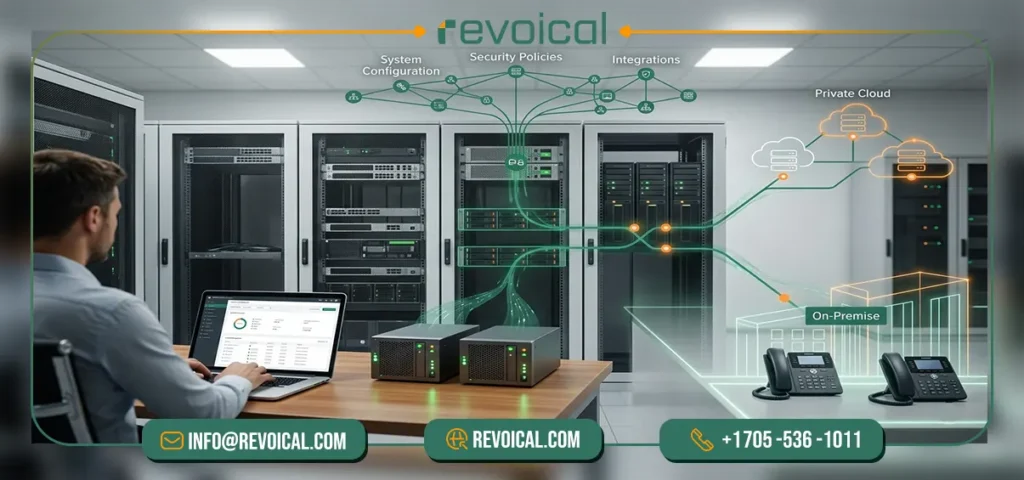
A Self-Hosted PBX is a business phone system that is deployed and managed on infrastructure controlled by the organization itself. Instead of relying on a third-party provider to operate the platform, the company maintains control over the PBX server, system configuration, security policies, integrations, and ongoing management. This approach gives businesses greater flexibility when building a VoIP environment that matches their operational requirements.
Unlike a fully managed cloud phone service, a self-hosted deployment allows organizations to decide where the system runs, how it is maintained, and which features or integrations are implemented. This is one of the main reasons why many businesses choose a self-hosted PBX as the foundation of their communication infrastructure or local call center environment.
Common Terms Related to Self-Hosted PBX
When researching PBX solutions, you may encounter several terms that are closely related to a self-hosted deployment. While they are often used interchangeably, there are slight differences between them.
On-Premise PBX
An on-premise PBX is a self-hosted phone system installed on servers located within the company’s office, branch, or data room. The organization owns and manages the hardware, software, and network resources used by the PBX.
This model is often preferred by businesses that require:
- Complete control over their communications infrastructure
- Internal management of security policies
- Local access to telephony systems and data
Private Cloud PBX
A private cloud PBX is also a self-hosted solution, but instead of being installed inside the office, it runs on dedicated cloud resources that are not shared with other organizations.
With a private cloud deployment, businesses can benefit from:
- Greater deployment flexibility
- Easier scalability
- Dedicated resources and enhanced control
- Remote accessibility without relying on a shared PBX platform
For many organizations, a private cloud PBX offers a balance between the control of an on-premise PBX and the flexibility of cloud infrastructure.
Local PBX System
A local PBX system generally refers to a PBX environment that is managed by the organization rather than by an external provider. Depending on the deployment model, it may run inside the company’s premises or on dedicated infrastructure hosted in a private data center.
The key characteristic is that the business retains ownership and control of the phone system.
Does a Self-Hosted PBX Have to Be Installed On-Site?

Not necessarily.
One common misconception is that a self-hosted PBX must be installed inside the company building. In reality, a self-hosted PBX can be deployed in several different ways:
- On a physical server within the office
- In a private data center
- On a dedicated virtual server
- In a private cloud environment
What makes the system “self-hosted” is not its physical location, but the fact that the organization controls and manages the PBX platform itself.
As a result, businesses can choose the deployment model that best fits their security requirements, compliance needs, scalability goals, and call center operations while still maintaining full ownership of their communications environment.
Read More About : Revoical Products
How Does a Self-Hosted PBX Work?
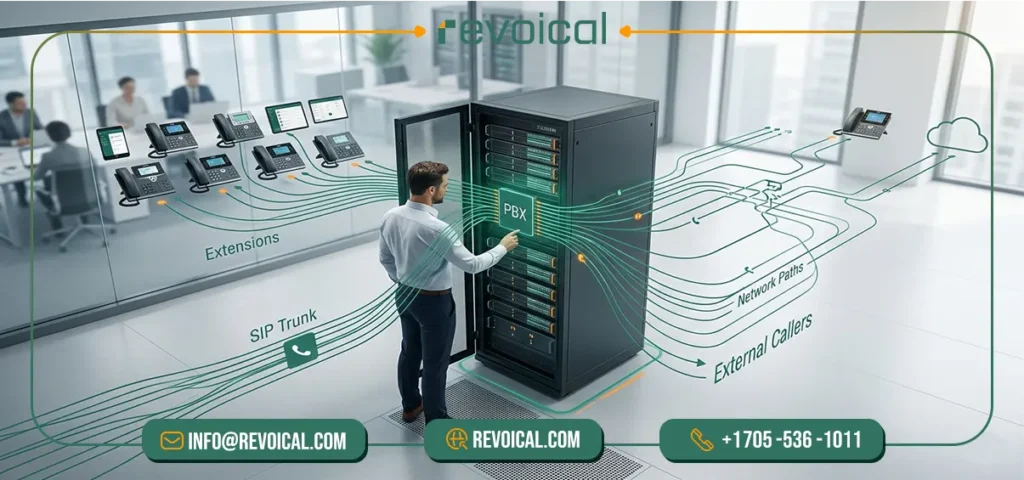
A self-hosted PBX works as the central communication system of a business, managing how calls are received, processed, and delivered to the right person or department. Whether the system is deployed as an on-premise PBX, a private cloud PBX, or another type of local PBX system, its primary role is to connect users, phone devices, and external callers through a single platform.
When someone calls a business number, the call first reaches the PBX platform through a SIP trunk. The system then analyzes predefined call rules and determines where the call should be directed. Depending on the configuration, the caller may be routed to a specific extension, transferred to a department, presented with an IVR menu, or placed into a call queue.
At the center of this process is the PBX server itself. The server manages user accounts, phone extensions, call routing policies, voicemail services, and other communication features that businesses rely on every day. Because the organization controls the server, a self-hosted PBX provides greater flexibility for customization and integration compared to many fully managed solutions.
Employees connect to the system using IP phones, desktop softphones, or mobile applications. Once connected, they can make and receive calls through the PBX regardless of whether they are working from the office, a branch location, or remotely. This flexibility is one of the reasons many organizations choose a self-hosted PBX when building a scalable business communication environment.
Several key components work together to make the system operate efficiently:
- PBX Server
The PBX server acts as the core of the platform. It processes calls, manages users and extensions, and controls communication features such as voicemail, call queues, and automated routing. - SIP Trunks
SIP trunks connect the PBX to external telephone networks and VoIP providers. They allow businesses to place and receive calls without relying on traditional phone lines. - Extensions
Extensions represent individual users, teams, or departments within the organization. They make it easy to route calls internally and ensure that callers reach the appropriate destination. - IP Phones and Softphones
Users access the system through IP desk phones, computer applications, or mobile softphones. This allows the same PBX platform to support both office-based and remote employees. - Call Routing
Call routing determines how incoming calls are handled. Rules can be configured to direct callers to specific departments, support queues, sales teams, or individual extensions, helping businesses deliver a more organized customer experience.
Although the technology behind a self-hosted PBX can be sophisticated, the overall concept is simple: the system receives calls, decides where they should go, and connects people efficiently. This ability to control and customize the entire call flow is what makes a self-hosted PBX a popular choice for businesses that require more flexibility than a standard hosted phone system can provide.
Related post: What Is VoIP and How Does It Work?
Self-Hosted PBX vs Hosted PBX: What’s the Difference?
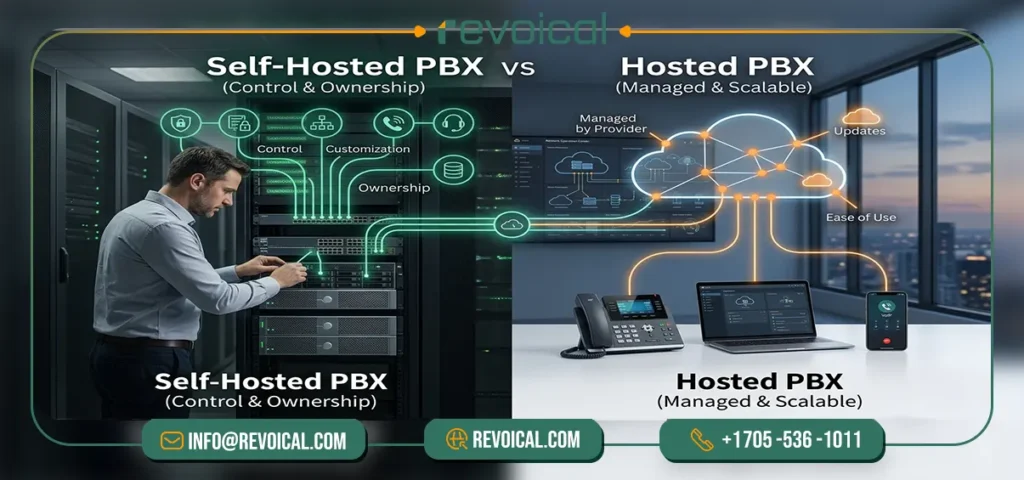
When evaluating a business phone system, one of the most common questions is whether to choose a self-hosted PBX or a hosted PBX solution. Both options provide modern VoIP capabilities, but they differ significantly in terms of control, management responsibilities, deployment flexibility, and long-term operational strategy.
A hosted PBX is managed by a service provider, which means the provider is responsible for maintaining the infrastructure, updates, and core system operations. In contrast, a self-hosted PBX is deployed on infrastructure controlled by the organization, giving businesses greater ownership over their communications environment.
The right choice depends on factors such as security requirements, customization needs, internal technical resources, and future growth plans.
Self-Hosted PBX vs Hosted PBX Comparison
| Feature | Self-Hosted PBX | Hosted PBX |
| Ownership | Organization owns and controls the platform | Provider manages the platform |
| Data Control | Full control over call data and configurations | Data is managed within the provider’s environment |
| Security | Security policies can be customized internally | Security is primarily handled by the provider |
| Customization | Extensive customization and integrations available | Usually limited to provider-supported features |
| Maintenance | Managed by the organization’s IT team or partner | Managed by the service provider |
| Initial Cost | Higher upfront deployment cost | Lower initial investment |
| Scalability | Depends on available infrastructure resources | Typically easier to scale through the provider |
While both models can support modern business communications, the level of control they offer is very different. A hosted PBX is often chosen by organizations that want a ready-to-use solution without managing servers or infrastructure. Since the provider handles maintenance, updates, and platform availability, businesses can focus on daily operations rather than system administration.
A self-hosted PBX, on the other hand, is typically preferred by organizations that require greater control over their communications platform. Because the system is deployed on dedicated infrastructure, businesses can implement custom call flows, integrate third-party applications, apply their own security policies, and maintain ownership of system data.
When a Self-Hosted PBX Makes More Sense
A self-hosted deployment is often a strong fit for organizations that:
- Require advanced call routing or custom workflows
- Operate a local or distributed call center
- Need tighter control over security and compliance requirements
- Want to integrate the PBX with internal business applications
- Prefer long-term ownership of their communications infrastructure
In these environments, a private cloud PBX, on-premise PBX, or other local PBX system can provide the flexibility needed to support business-specific requirements that may not be available in a standard hosted service.
When a Hosted PBX May Be the Better Option
Hosted solutions are often better suited for businesses that:
- Need a faster deployment process
- Have limited internal IT resources
- Prefer a predictable subscription-based model
- Want the provider to manage maintenance and upgrades
For many small businesses, a hosted PBX can deliver the essential communication features they need without the responsibility of managing the underlying infrastructure.
Ultimately, neither model is universally better than the other. A hosted PBX prioritizes simplicity and convenience, while a self-hosted PBX prioritizes control, customization, and ownership. Understanding these differences is the first step toward selecting a phone system that aligns with both your technical requirements and your long-term business goals.
Read More: VoIP vs Landline vs Mobile
Why Businesses Choose a Self-Hosted PBX

The growing popularity of cloud communications has made hosted phone systems more accessible than ever. However, many organizations still choose a self-hosted PBX because it offers a level of control, flexibility, and ownership that is difficult to achieve with a fully managed platform.
For businesses that rely heavily on voice communications, customer service operations, or call center activities, maintaining direct control over the phone system can provide both operational and strategic advantages. Whether deployed as an on-premise PBX, a private cloud PBX, or another type of local PBX system, a self-hosted solution allows organizations to build a communication environment that aligns with their specific requirements.
1. Full Control Over Voice Infrastructure
One of the primary reasons businesses choose a self-hosted PBX is the ability to control every aspect of their voice infrastructure.
Rather than depending on a provider’s predefined settings, organizations can configure call routing rules, extensions, IVR menus, user permissions, and communication workflows according to their own operational needs. This level of control is particularly valuable for businesses with unique call handling requirements or complex internal processes.
As communication needs evolve, the platform can be adjusted without being limited by the capabilities or restrictions of a third-party service.
2. Greater Security and Data Ownership
For many organizations, communication data is considered a critical business asset. A self-hosted PBX allows businesses to maintain greater control over call records, recordings, system configurations, and access policies.
This can be especially important for industries that operate under internal security standards, regulatory requirements, or data governance policies. By managing the PBX environment directly, organizations can implement security measures that align with their own compliance and operational objectives.
In addition, businesses retain ownership of their communication environment rather than relying entirely on external infrastructure.
3. Advanced Customization and Integrations
Every business has its own workflows, software ecosystem, and customer engagement processes. A self-hosted PBX provides the flexibility to integrate communication services with existing business applications and internal systems.
Common integration scenarios include:
- CRM platforms for customer interactions
- ERP systems for operational workflows
- Help desk and ticketing platforms
- Internal reporting and analytics tools
- Custom business applications
This flexibility makes a self-hosted deployment particularly attractive for organizations that require communication processes tailored to their business operations.
4. Predictable Long-Term Costs
While a self-hosted PBX may require a larger initial investment than a hosted solution, many businesses view it as a long-term infrastructure asset rather than a recurring service expense.
Because organizations manage their own platform, they typically have greater visibility into infrastructure costs, licensing requirements, and future expansion plans. As the business grows, this can lead to more predictable operational expenses and greater control over technology investments.
For companies planning to operate a communication platform for many years, a self-hosted PBX can offer a sustainable and cost-effective foundation for business communications and call center operations.
Ultimately, organizations choose a self-hosted PBX because it provides more than just phone service. It delivers ownership, flexibility, security, and customization capabilities that help businesses build a communication platform around their own goals rather than adapting their processes to fit the limitations of a managed service.
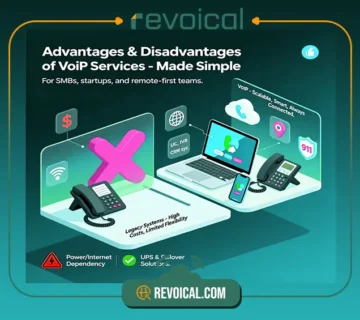
See More: Advantages and Disadvantages of VoIP service
Self-Hosted PBX as the Foundation of a Local Call Center
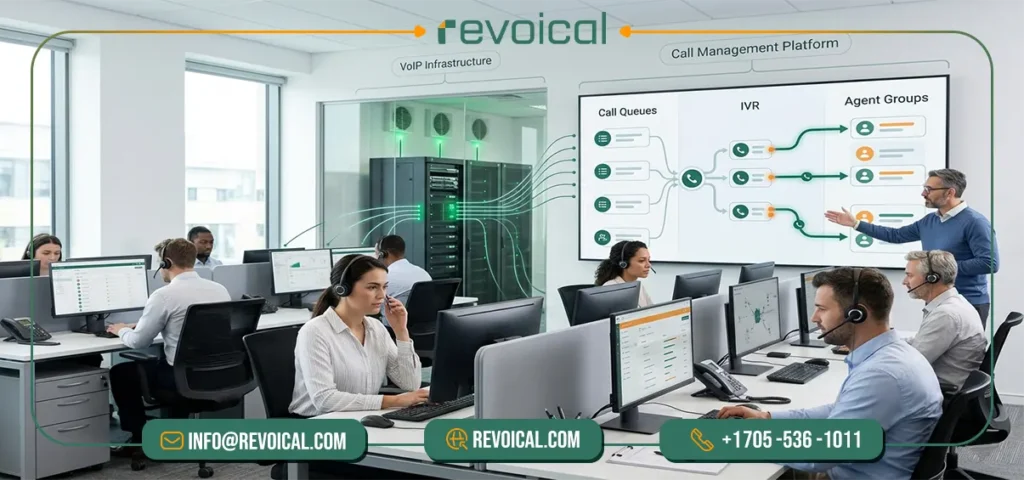
Many businesses invest in a self-hosted PBX not only to manage internal communications but also to support customer-facing operations. In fact, a local PBX system often becomes the foundation of a local call center, enabling organizations to handle higher call volumes while maintaining full control over their communication infrastructure.
Unlike a basic business phone system, a call center requires tools that help manage customer interactions more efficiently. A self-hosted PBX can provide these capabilities while giving businesses the flexibility to customize workflows based on their operational needs.
Some of the most commonly used call center features include:
- Call Queues to manage incoming calls during busy periods.
- IVR (Interactive Voice Response) to direct callers to the appropriate department.
- Agent Groups to distribute calls among available team members.
- Call Recording for quality assurance, training, and compliance purposes.
- Real-Time Monitoring to track call activity and agent availability.
- Reporting and Analytics to measure performance and identify improvement opportunities.
Whether deployed as an on-premise PBX or a private cloud PBX, these capabilities allow businesses to build a scalable call center environment without relying entirely on third-party platforms.
For organizations that depend on customer support, sales teams, or service desks, a self-hosted PBX can serve as more than a phone system—it can become the core communication platform that supports long-term growth.
Who Needs a Self-Hosted PBX?

A self-hosted PBX is best suited for organizations that need greater control over their communications infrastructure than a standard hosted solution can provide.
It is typically the right choice for:
Enterprises With Strict Security Requirements
Businesses such as banks, government agencies, and healthcare providers that need greater control over communication data, security policies, and compliance.
Companies Running Internal Call Centers
Organizations with customer support or sales teams that rely on features like call queues, IVR, call recording, and reporting to manage customer interactions efficiently.
Organizations Requiring Custom VoIP Workflows
Businesses that need custom call routing or integrations with CRM, ERP, or other internal systems often benefit from the flexibility of a self-hosted PBX.
Businesses That Want Full Platform Ownership
Companies that prefer to manage their own on-premise PBX, private cloud PBX, or local PBX system instead of relying on a third-party provider.
Overall, organizations that value control, customization, security, and long-term flexibility are often the best fit for a self-hosted PBX.
Read More About: Revoical Voip Solutions
Final conclusion

A self-hosted PBX is not the right fit for every organization. However, for businesses that require greater control over their communications infrastructure, stronger security, advanced customization, and call center capabilities, it can be a valuable long-term investment.
Whether deployed as an on-premise PBX, a private cloud PBX, or another type of local PBX system, a self-hosted deployment gives organizations the flexibility to build communication workflows around their business needs rather than adapting to the limitations of a managed platform.
As communication requirements continue to evolve, having full ownership of your PBX environment can help support future growth, operational efficiency, and a better customer experience.
If you are considering a self-hosted PBX for your business, explore the Revoical Self-Hosted PBX solution to learn how a fully customizable and call center-ready platform can support your organization’s communication goals.
FAQ
Will the system run on servers located within your organization, in a private data center, or in a private cloud environment? The deployment model you choose can impact security, scalability, maintenance, and overall infrastructure costs.
A self-hosted PBX gives businesses greater control, but it also requires ongoing management. Consider who will be responsible for software updates, security patches, system monitoring, and data backups.
Not every organization needs advanced call center features. Identify whether your business requires capabilities such as call queues, IVR menus, call recording, reporting, or real-time monitoring before selecting a solution.
Understanding your expected call volume is essential when planning a PBX deployment. The number of simultaneous calls can influence server sizing, infrastructure requirements, and future scalability.
Some industries have specific requirements regarding data storage, security, and regulatory compliance. If your organization operates in a regulated environment, make sure the PBX deployment model aligns with those obligations.




No comment